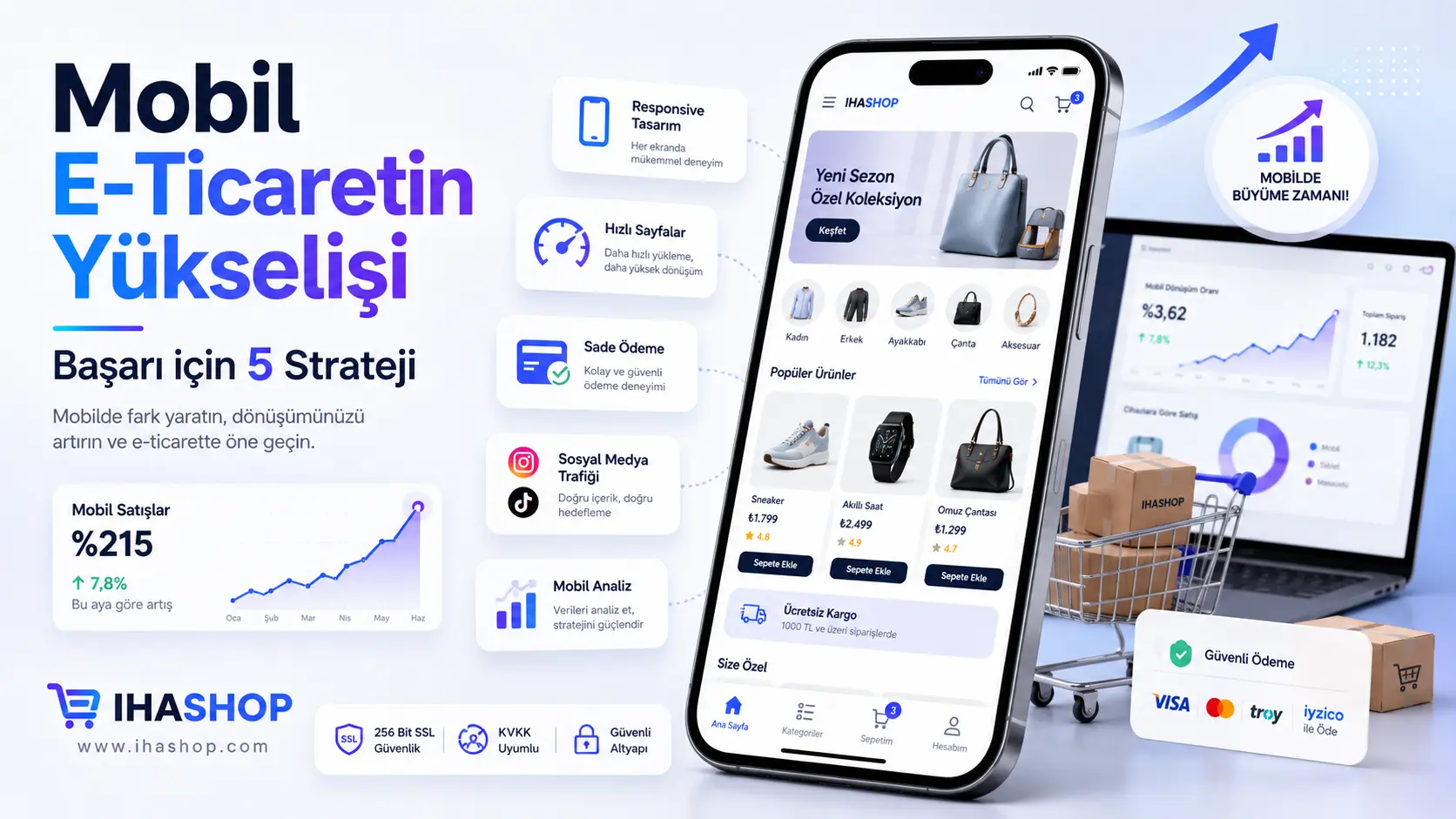
Mobile devices have become the primary touchpoints where e-commerce customers research products, compare prices, and make purchase decisions. Today, most users first browse a product on their smartphones, read reviews, compare deals, and ultimately complete their purchase directly on their mobile devices.
For this reason, having an online store that only looks good on desktop is no longer sufficient. A mobile-first store that loads instantly, offers seamless navigation, builds trust, and guides users effortlessly to the checkout will generate significantly more sales.
The key to success in mobile commerce is making it easy for customers to make decisions on smaller screens. Users must find product details effortlessly, see pricing clearly, and experience zero friction during the add-to-cart and payment steps. Implementing the following 5 mobile commerce strategies will help you build a superior user experience and achieve higher conversion rates.
1. Implement a Responsive and Clean User Interface (UI)
Mobile users have no patience for long menus, tiny buttons, or cluttered product pages. When visitors land on your mobile store, they should immediately find what they are looking for, view product images clearly, and spot the call-to-action (CTA) buttons instantly.
Product cards, pricing, variant selection, stock availability, and the 'Add to Cart' button must be prominently displayed on mobile screens. Keep your navigation menu concise, make the search bar highly accessible, and ensure that filtering options are intuitive and easy to use.
Clutter is the biggest enemy of mobile conversions. A clean, minimalist design that guides the user directly toward a purchase is always the best approach.
2. Prioritize Mobile Page Speed Optimization
Mobile shoppers expect instant gratification. Given that mobile internet connections can sometimes be unstable, slow-loading product pages can lead to massive revenue losses.
Optimize images, minimize unnecessary scripts, choose a high-performance theme, and ensure your pages load as fast as possible. Product listings, category pages, and checkout screens must perform fluidly on all mobile devices.
Fast-loading mobile pages do not just improve the user experience; they also maximize your ad spend efficiency. When users clicking on your ads are greeted with an instant-loading page, they are far more likely to stay and convert.
3. Optimize the Checkout Flow for Mobile Users
Filling out forms on a smartphone is inherently more difficult than on a desktop. Long checkout forms, repetitive input fields, and complex payment steps often lead to high cart abandonment rates.
To combat this, keep your checkout page as short as possible. Remove unnecessary fields, enable address autofill, and offer guest checkout options. Ensure error messages are clear and helpful so users immediately know which field needs correction.
Eliminate redundant steps between the cart and payment screens, and display trusted payment badges clearly. The simpler the mobile checkout process, the lower your cart abandonment rate will be.
4. Align Landing Pages with Social Media Traffic
Traffic coming from Instagram, Facebook, TikTok, or Google Ads is almost entirely mobile. These users make quick decisions and expect to land directly on the specific product, category, or promotional offer they clicked on.
Avoid sending social media ad traffic to your homepage. Instead, direct users to dedicated landing pages that match their search intent. If a user clicks an ad for a specific product, that product should be the first thing they see.
First impressions are critical for social media traffic. Ensure the landing page loads instantly, the promotional message is crystal clear, and the checkout path is frictionless to maximize your ad ROI.
5. Analyze Mobile User Behavior Data Regularly
Succeeding in mobile e-commerce requires continuous optimization. You must regularly track and analyze how mobile users interact with your online store.
Monitor key metrics such as mobile conversion rates, cart abandonment rates, high-exit pages, device-specific loading speeds, and checkout drop-off points using web analytics tools.
This data-driven approach reveals exactly where you are losing customers, which product pages lack persuasive power, and where friction occurs in the checkout funnel. Regular analysis allows you to make informed optimization decisions based on real user data rather than assumptions.
Conclusion
Mobile e-commerce is about much more than just having a responsive website. It requires a holistic approach that combines speed, simplicity, trust, frictionless checkout, targeted social traffic, and continuous data analysis.
E-commerce brands that deliver an exceptional mobile shopping experience convert more visitors into loyal customers. When users can browse effortlessly, add items to their cart seamlessly, and checkout securely, your conversion rates will naturally climb.
With IHASHOP’s mobile-optimized e-commerce infrastructure, you can build a high-converting, professional online store. Leverage our lightning-fast page speeds, simplified checkout flows, responsive designs, and powerful management tools to scale your mobile sales effortlessly.